
World Cup 2026 Visa Guide: Entry Requirements for Every Host Country
A practical guide to World Cup 2026 visa and entry requirements for the United States, Canada, and Mexico. Learn which documents you need, how cross-border travel works, key timelines, and common mistakes to avoid before booking flights or buying tickets.
FBall26 Editorial Desk
1/14/20265 min read
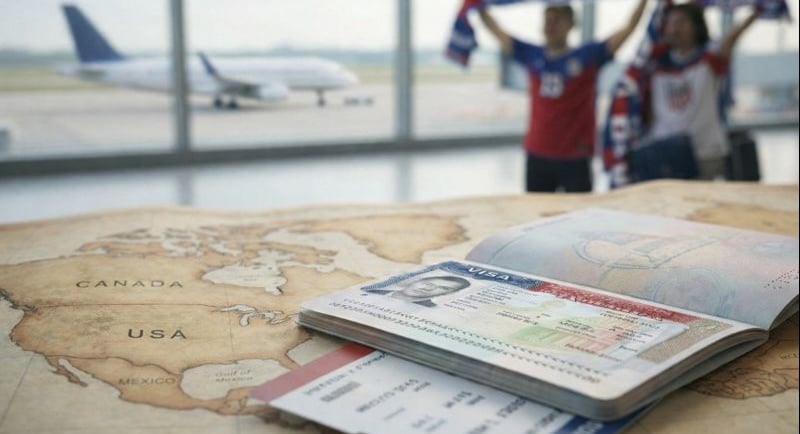
The 2026 FIFA World Cup will be hosted across three countries — the United States, Canada, and Mexico — from June 11 to July 19, 2026.
For fans planning to attend matches in multiple cities or follow their team across borders, this creates a logistical challenge rarely seen in previous tournaments. Three host nations mean three separate immigration systems, each with its own rules, documentation requirements, and processing timelines.
This guide explains the entry requirements for each host country and outlines how fans should prepare before booking flights or purchasing tickets.
Important: Holding a World Cup ticket does not guarantee visa issuance or entry into any host country.
The Core Principle: Three Countries, Three Sets of Rules
A visa or travel authorization for one host country does not automatically grant entry into the others.
Approval to enter the United States does not guarantee entry into Canada or Mexico, and the same applies in reverse. Fans planning cross-border travel must independently meet the entry requirements of every country in their itinerary.
This is the single most important planning consideration for World Cup 2026 travel.
United States: 78 Matches, 11 Host Cities
The United States will host the majority of the tournament, including the final at MetLife Stadium in New Jersey.
Visa Waiver Program and ESTA
The Visa Waiver Program allows citizens of 41 eligible countries to enter the United States for tourism or business for up to 90 days without a visa.
Travelers must apply for authorization through the Electronic System for Travel Authorization (ESTA) prior to departure.
Application: online
Cost: USD 21
Validity: up to two years or until passport expiration
Recommended timing: at least 72 hours before travel
Eligible countries include most of Western Europe, Japan, South Korea, Australia, New Zealand, and others.
B1/B2 Tourist Visa
Travelers from countries not eligible for ESTA must apply for a B1/B2 tourist visa. This visa allows short-term visits for tourism, business, and events such as international sports tournaments, typically permitting stays of up to six months.
Citizens of countries such as India, Nigeria, Colombia, and many others are required to obtain this visa. In several regions, interview wait times at U.S. embassies can exceed 300 days, depending on location.
FIFA Priority Appointment Scheduling System (FIFA PASS)
FIFA World Cup 2026 ticket holders traveling to the United States may be eligible for the FIFA Priority Appointment Scheduling System (FIFA PASS).
This program provides access to prioritized visa interview slots for qualifying applicants. While it does not guarantee visa approval, it may significantly reduce waiting times in high-demand countries.
Fans who require a U.S. visa and have access to FIFA PASS should apply immediately.
Important Restrictions
Travelers from Visa Waiver Program countries who have visited certain countries since 2011, or Cuba since 2021, are not eligible for ESTA and must apply for a visa instead. These restrictions are strictly enforced.
Canada: Toronto and Vancouver
Canada will host matches in Toronto and Vancouver.
Electronic Travel Authorization (eTA)
An Electronic Travel Authorization (eTA) is required for visa-exempt foreign nationals traveling to Canada by air.
Application: online
Cost: CAD 7
Validity: up to five years or until passport expiration
Processing time: often approved within minutes
Citizens of most European Union countries, the United Kingdom, Australia, Japan, and other visa-exempt nations require an eTA when flying to Canada.
U.S. citizens are exempt from the eTA requirement but must carry valid identification.
Visitor Visa Requirements
Travelers from visa-required countries must obtain a Canadian visitor visa.
In some cases, travelers who previously held a Canadian visitor visa or currently hold a valid U.S. nonimmigrant visa may be eligible for an eTA instead of a full visitor visa.
Land Versus Air Entry
Entry rules differ depending on how travelers arrive in Canada. Some visa-required nationals may travel by air with an eTA but still require a visitor visa when entering by land, including by car, bus, train, or cruise ship.
This distinction is critical for fans crossing borders between host cities.
Mexico: Mexico City, Guadalajara, Monterrey
Mexico will host matches in three cities, including the historic Estadio Azteca in Mexico City.
FMM Tourist Card
All foreign visitors entering Mexico must obtain a Forma Migratoria Múltiple (FMM) tourist card.
The FMM is not a visa. It is an entry document required for stays longer than 72 hours or travel beyond the immediate border zone. It allows stays of up to 180 days.
Air travel: fee usually included in airfare
Land crossings: fee typically around USD 45
Visa-Exempt Entry
Many travelers do not require a Mexican visa if they hold a valid passport from countries such as the United States, Canada, the United Kingdom, Japan, or a Schengen Area country.
Additionally, travelers holding a valid multiple-entry U.S. visa may enter Mexico without obtaining a separate Mexican visa — a significant advantage for many fans.
Who Needs a Mexican Visa
Travelers who do not meet visa-exempt criteria must apply for a Mexican visa in advance. This includes citizens of several Latin American, African, and Asian countries.
Cross-Border Travel: What Fans Need to Know
Fans attending matches in multiple countries should plan carefully:
Travelers with a valid U.S. visa may enter Mexico without an additional visa (FMM still required) and may qualify for a Canadian eTA instead of a visitor visa, depending on nationality.
ESTA-eligible travelers can often combine ESTA (U.S.), eTA (Canada), and FMM (Mexico) without applying for additional visas.
Travelers requiring visas for all three countries should begin with the U.S. application, as processing times are longest.
There is no unified “Fan ID” or single World Cup visa covering all three countries.
Timeline: When to Apply
Visa processing delays are common, and demand will increase as the tournament approaches.
Recommended timeline (as of January 2026):
Immediately: Confirm entry requirements and apply for a U.S. B1/B2 visa if required (use FIFA PASS if eligible)
3–6 months before travel: Apply for a Canadian visitor visa if required
1–3 months before travel: Apply for a Mexican visa if required
72+ hours before departure: Apply for ESTA and eTA if eligible
Before travel: Complete the Mexican FMM
Starting early is essential. Waiting may result in missed matches or denied entry.
Required Documents
For all countries:
Valid passport (preferably with at least six months remaining validity)
Return or onward travel tickets
Proof of accommodation
Evidence of sufficient funds
Match tickets or confirmation, if available
Country-specific requirements:
United States: ESTA approval or B1/B2 visa
Canada: eTA approval or visitor visa
Mexico: Completed FMM tourist card
Common Mistakes to Avoid
Assuming one visa covers all three countries
Applying too late, especially for U.S. visas
Ignoring land versus air entry differences
Failing to carry printed copies of approvals
Overlooking the Mexican FMM requirement
Traveling with a passport nearing expiration
Official Resources
United States: state.gov
Canada: canada.ca
Mexico: inm.gob.mx
FIFA Visa Information: fifa.com
Final Assessment
World Cup 2026 offers unprecedented access to football’s biggest event across three countries — but that opportunity comes with administrative complexity.
Holding a World Cup ticket does not guarantee entry into any host country. Fans are fully responsible for understanding and meeting all immigration requirements.
Those who plan early, verify documentation, and respect timelines will enjoy a smooth experience. Those who wait may find themselves watching from home.
Takeaway: Three countries mean three approvals. Start early and confirm every requirement before booking.