World Cup 2026 Ticket Boycott: Is the Mass Cancellation Crisis
Viral claims suggest 17,000 fans cancelled World Cup 2026 tickets in protest. We separate social media rumors from verified FIFA data and official entry facts.
FBall26 Editorial Desk
1/14/20263 min read
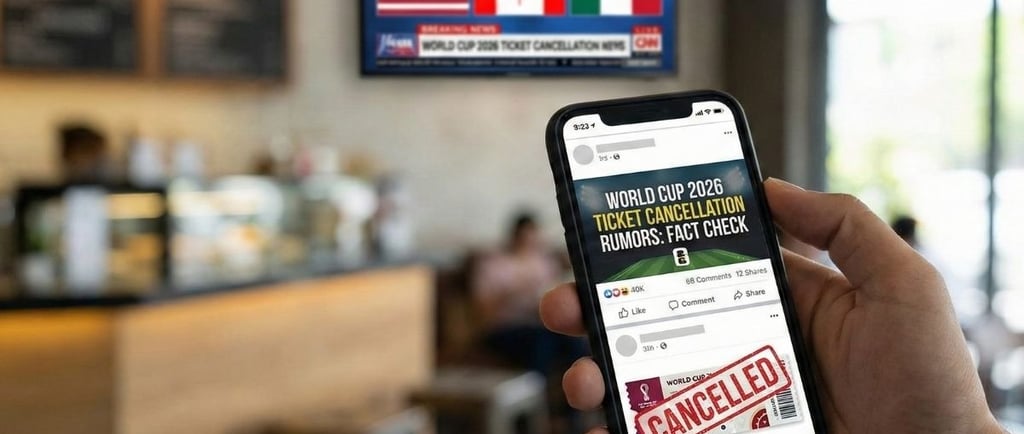
In recent days, social media and several opinion-driven outlets have circulated claims that international fans are cancelling FIFA World Cup 2026 tickets in protest of the political and immigration climate in the United States.
Some posts describe a growing boycott movement, citing fears around border enforcement, safety, and perceptions that the U.S. has become unwelcoming to foreign visitors. Figures ranging from 15,000 to 17,000 alleged cancellations have been widely repeated online.
But what is actually confirmed — and what remains unverified?
The Context: Why the Conversation Is Emerging Now
The 2026 tournament will be the first World Cup hosted across three countries — the United States, Canada, and Mexico — with the U.S. staging the majority of matches, including the final.
Against that backdrop, political developments in the United States have increasingly entered public discussion around the tournament. Some international fans have openly questioned whether travel to U.S. host cities will feel safe or predictable, particularly given heightened visibility of immigration enforcement and polarized domestic politics.
On social platforms, calls to “boycott U.S. matches” have gained traction in certain circles, often framed as symbolic protest rather than coordinated action.
Have Tickets Actually Been Cancelled?
At this stage, there is no official confirmation from FIFA or its ticketing partners that tens of thousands of ticket holders have cancelled purchases in protest.
Several important clarifications are necessary:
FIFA ticketing phases allow expressions of interest, applications, and resale listings, not all of which represent finalized purchases.
In many cases, so-called “cancellations” appear to refer to withdrawals from ticket application phases, not refunded, paid tickets.
FIFA has not released any verified figures confirming mass cancellations linked to political protest.
In short: individual fans have publicly stated they are no longer planning to attend, but the scale of actual ticket cancellations remains unclear.
What Is Confirmed
While numbers are disputed, several elements are verifiable:
Calls for boycotts of U.S.-hosted matches are circulating on social media.
A small number of public figures have stated they will not attend matches in the United States, citing safety or political concerns.
Immigration and entry policies are already a major concern for fans planning cross-border travel, particularly given long U.S. visa wait times in many countries.
These factors are real, but they do not yet amount to a confirmed attendance crisis.
FIFA’s Position So Far
FIFA has not issued any public statement acknowledging a boycott movement or unusual cancellation levels.
Historically, FIFA has limited ticket refund options and relies on secondary resale platforms to manage changes in demand. At present, ticket prices for later tournament rounds remain high, suggesting that organizers are not yet reacting to a demand collapse.
Why Perception Still Matters
Even without verified mass cancellations, perception alone can influence behavior.
Large international tournaments depend not only on ticket sales but on:
Sponsor confidence
Media narratives
Fan travel sentiment
If a perception spreads that attending matches in certain host countries carries added uncertainty, some fans may redirect travel plans toward Canada or Mexico, or opt to follow the tournament remotely.
This is particularly relevant for a World Cup that already requires fans to navigate three immigration systems, long travel distances, and complex logistics.
A Tournament Built on Unity — Under Scrutiny
The World Cup is marketed as a celebration of global unity and shared experience. Any narrative that clashes with that image — whether justified or exaggerated — creates reputational risk.
For now, however, the available evidence points to debate and concern, not a proven mass boycott.
What to Watch Going Forward
Key indicators over the coming months will include:
Official statements or data releases from FIFA or ticketing partners
Trends in resale inventory for U.S.-hosted matches
Changes in visa processing policies or tournament-specific entry facilitation
Sponsor and broadcaster messaging
Until then, claims of widespread ticket cancellations should be treated cautiously.
Final Assessment
There is growing discussion — and genuine concern among some international fans — about attending World Cup 2026 matches in the United States. Some individuals have publicly withdrawn their plans.
However, there is no verified evidence at this time of large-scale ticket cancellations driven by an organized boycott.
The situation remains fluid. The real impact, if any, will become clearer as the tournament approaches and as official data — not social media claims — emerges.
Takeaway: Debate is real. Numbers are not confirmed. Fans should separate documented facts from viral claims when assessing the situation around World Cup 2026 attendance.