
World Cup 2026 Stadium Rankings: The Ultimate Fan Experience Guide
The 2026 FIFA World Cup will be staged across 16 stadiums in three countries — the United States, Mexico, and Canada. Each venue offers a very different matchday experience, shaped by history, crowd culture, stadium design, technology, climate, and accessibility.
FBall26 Editorial Desk
1/18/20263 min read

This ranking focuses on what matters most to fans:
atmosphere, accessibility, comfort, sightlines, and overall matchday experience — not just size or prestige
Tier 1: The Elite Venues
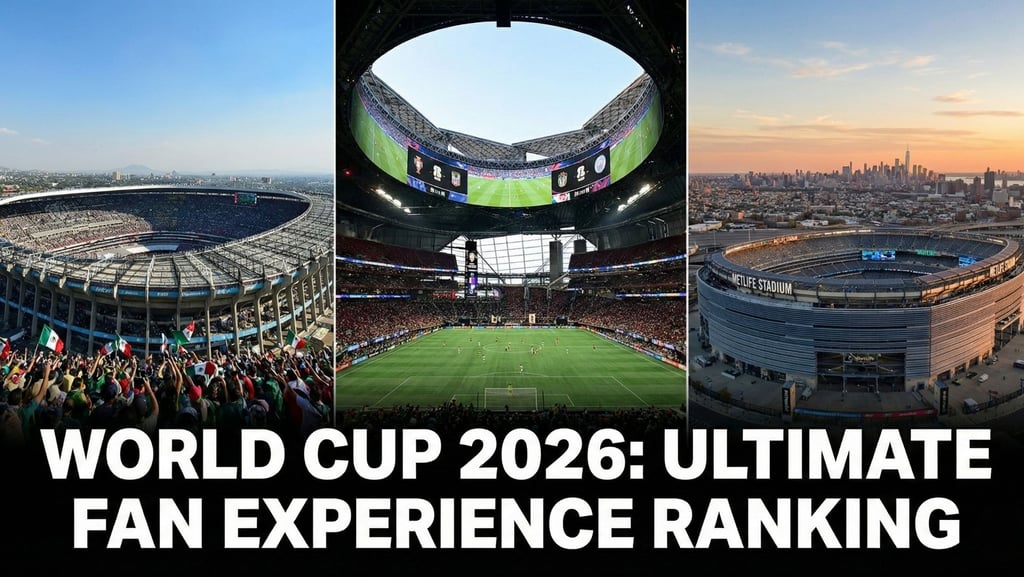
1. Estadio Azteca — Mexico City
Capacity: ~83,000
No stadium in World Cup history carries more significance.
Estadio Azteca will become the first stadium ever to host matches at three World Cups (1970, 1986, 2026). It is inseparable from football history — from Pelé lifting the trophy in 1970 to Diego Maradona’s defining moments in 1986.
Beyond history, the atmosphere is unmatched. Mexican supporters bring intensity, noise, and emotional connection that few venues in the world can replicate. Ongoing renovations aim to modernize facilities while preserving the stadium’s character.
Why it ranks first:
No other venue combines history, atmosphere, and emotional weight like Estadio Azteca. For pure football experience, this is the tournament’s spiritual home.
2. Mercedes-Benz Stadium — Atlanta
Capacity: ~75,000
Atlanta has quietly become one of the strongest football cities in North America.
Mercedes-Benz Stadium delivers a proven soccer atmosphere, driven by Atlanta United’s record-breaking attendance and one of the largest supporters’ sections in MLS. The retractable roof, massive halo video board, and fan-friendly pricing make it one of the most comfortable and engaging venues in the tournament.
Why it ranks second:
Elite facilities combined with a genuine football culture and a downtown location that works for fans.
3. MetLife Stadium — New York / New Jersey
Capacity: ~82,500
Final venue — July 19, 2026
The final alone secures MetLife Stadium’s place near the top.
While it lacks the futuristic design of newer venues, MetLife offers scale, accessibility, and tournament-defining importance. Rail access from Manhattan and major upgrades ahead of 2026 significantly improve the fan experience.
Why it ranks third:
It crowns the world champion — and delivers one of the most logistically accessible major venues in the tournament.
Tier 2: Modern Showpieces
4. SoFi Stadium — Los Angeles
Capacity: ~70,000
SoFi Stadium is an architectural landmark and one of the most technologically advanced venues ever built. The translucent canopy and massive circular video board create a visually stunning environment.
The main challenge is logistics — traffic and distance — though transport improvements are ongoing.
Why it ranks fourth:
Unmatched technology and design, but atmosphere depends heavily on traveling fanbases.
5. AT&T Stadium — Dallas
Capacity: 92,000+
The largest venue in the tournament and the stadium hosting the most matches, including a semifinal.
Climate control, a retractable roof, and enormous video screens ensure comfort in Texas summer conditions. Atmosphere, however, will depend on which supporters show up.
Why it ranks fifth:
World-class infrastructure and match volume, with atmosphere as the variable.
Tier 3: Strong Regional Venues
6. Hard Rock Stadium — Miami
Capacity: ~65,000
A natural hub for South American supporters, Miami will host several high-profile matches. The stadium is experienced with major global events, though its suburban setting requires planning.
7. Levi’s Stadium — San Francisco Bay Area
Capacity: ~71,000
Modern and well-equipped, but its distance from central San Francisco creates logistical challenges for visiting fans.
8. NRG Stadium — Houston
Capacity: ~72,000
Retractable roof, strong infrastructure, and a fanbase closely tied to Mexican and Central American football culture.
9. Arrowhead Stadium — Kansas City
Capacity: ~76,000
Known as the loudest stadium in the world, Arrowhead offers intensity. The key question is how that energy translates to international football crowds.
Tier 4: Solid but Limited
10. Lincoln Financial Field — Philadelphia
Capacity: ~69,000
Reliable, accessible, and backed by a passionate local sports culture.
11. Lumen Field — Seattle
Capacity: ~69,000
A proven football environment with crowd noise amplified by stadium design.
12. Gillette Stadium — Boston
Capacity: ~65,000
Functional and upgraded, but less distinctive than newer venues.
Tier 5: Mexico’s Supporting Venues
13. Estadio BBVA — Monterrey
Capacity: ~53,000
Modern design with a dramatic mountain backdrop and passionate local support.
14. Estadio Akron — Guadalajara
Capacity: ~48,000
Smaller scale, strong atmosphere, but limited role in later tournament stages.
Tier 6: Canada’s Venues
15. BC Place — Vancouver
Capacity: ~54,000
Retractable roof and scenic setting, with improving football culture.
16. BMO Field — Toronto
Capacity: ~45,000
The smallest venue, but centrally located with a committed supporter base.
Key Factors for Fan Experience
Atmosphere: Mexican venues and Atlanta lead the field
Accessibility: MetLife, Mercedes-Benz Stadium, and BMO Field perform best
Comfort: Retractable-roof stadiums offer critical summer protection
Technology: SoFi Stadium sets the benchmark
History: Estadio Azteca stands alone
Final Assessment
World Cup 2026 offers unprecedented variety in stadium experiences.
Atmosphere seekers: Mexico City, Atlanta
Technology and spectacle: Los Angeles, Dallas
Historic moments: MetLife Stadium, New York/New Jersey
Takeaway:
Choose your stadium based on your priorities. History, comfort, noise, or spectacle — World Cup 2026 offers a venue for every kind of fan.