
Which World Cup 2026 Host Cities Are Getting Expensive First — And Why
Not all World Cup 2026 host cities are seeing the same level of travel pressure. While demand is building across all 16 venues, some markets are heating up faster than others — driven by a combination of match significance, existing tourism infrastructure, and geographic positioning.For fans planning their trips, understanding which cities are likely to get expensive first can help guide smarter booking decisions.
Miami: Early Leader in Price Pressure
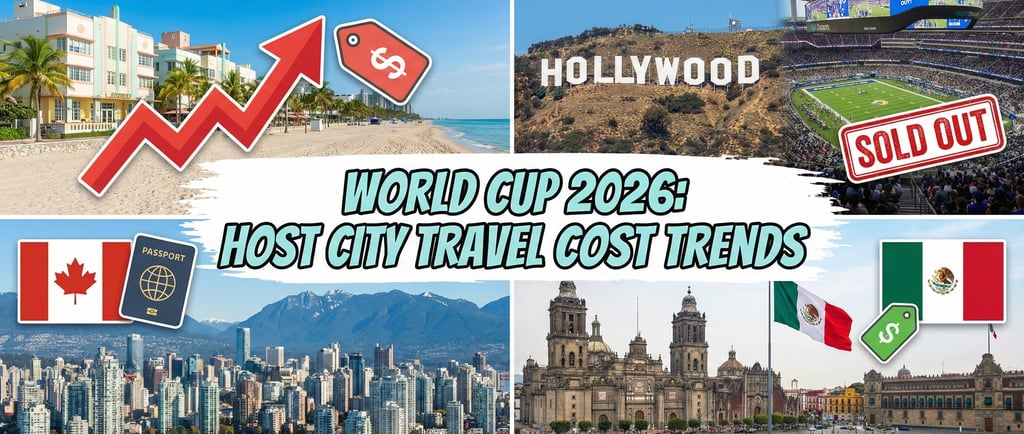
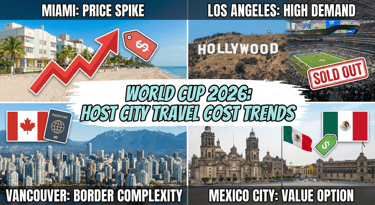
Miami is emerging as one of the most expensive host cities for World Cup 2026. The combination of limited hotel inventory near Hard Rock Stadium, high baseline tourism demand, and strong interest from South American fan bases is already pushing prices upward.
Hotels within reasonable distance of the stadium are showing rates significantly above pre-summer historical levels, even for dates that haven't yet been confirmed as match days. Miami's appeal as a destination — beaches, nightlife, Latin American connectivity — makes it a magnet for fans regardless of which teams play there.
Los Angeles: High Demand, High Capacity
Los Angeles presents a different dynamic. As one of the largest host cities, LA has substantial hotel inventory — but also faces enormous baseline demand. SoFi Stadium's location in Inglewood means fans will compete with regular tourism and entertainment traffic.
Current pricing suggests moderate increases compared to historical averages, but availability in premium locations (Santa Monica, West Hollywood, Downtown) is already tightening for projected match windows.
Dallas: Steady Build
Dallas offers a more balanced picture. AT&T Stadium in Arlington benefits from a large regional hotel market, and prices have not yet spiked dramatically. However, the city's central US location makes it a likely hub for fans traveling between coasts — which could drive late-stage demand once schedules are confirmed.
Vancouver: Cross-Border Complexity
Vancouver is seeing increased interest from fans who want to experience the Canadian portion of the tournament. However, the city's relatively limited downtown hotel inventory and strong summer tourism season mean prices are already elevated.
For fans crossing from the US, Vancouver also introduces border considerations that may affect spontaneous travel decisions.
Mexico City and Monterrey: Value Opportunities
Mexican host cities currently offer some of the most competitive pricing among World Cup 2026 venues. Both Mexico City and Monterrey have substantial hotel inventory and lower baseline costs compared to US cities.
For fans comfortable with Spanish-language environments and cross-border logistics, Mexico may represent the best value option for attending group-stage matches — particularly if CONCACAF teams are scheduled there.
Takeaway: High-demand cities like Miami are already pricing in tournament pressure — fans targeting these markets should move early.