
USMNT 2026: Can Pochettino Lead the USA to a Historic World Cup Run
Home advantage, Pochettino's tactics, and a golden generation. Can the USA reach the semi-finals in 2026? Read our data-driven analysis and realistic predictions.
FBall26 Editorial Desk
1/14/20264 min read
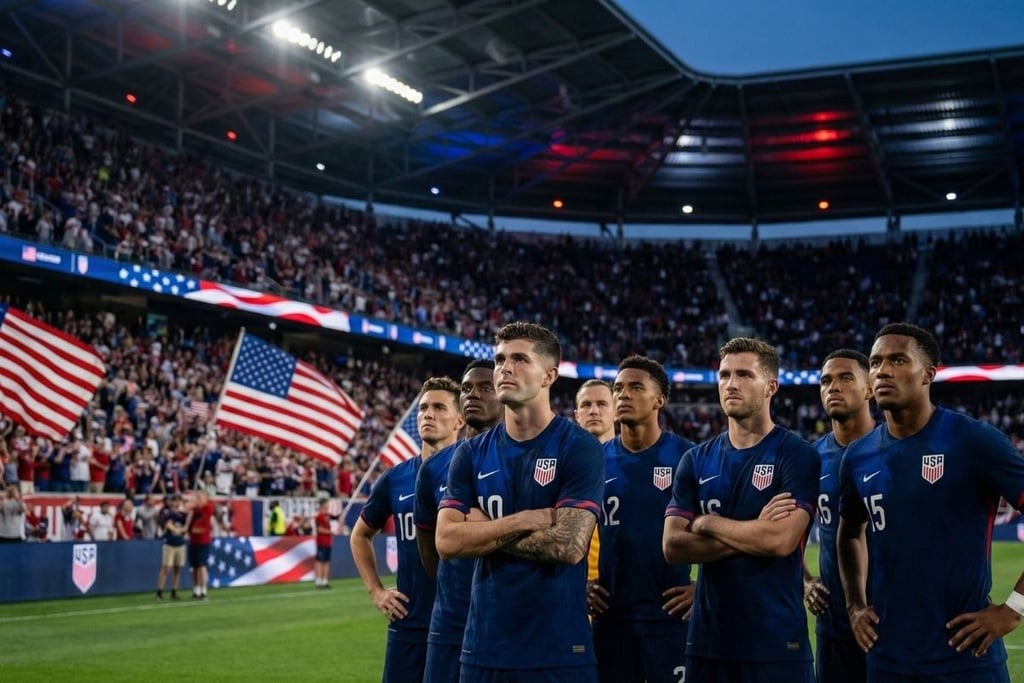
The United States will host the majority of the FIFA World Cup 2026, alongside Canada and Mexico, marking the first time the tournament returns to U.S. soil since 1994. With home advantage, a favorable group draw, an experienced head coach in Mauricio Pochettino, and a generation of players competing regularly in Europe’s top leagues, optimism around the USMNT is steadily building.
But what does historical precedent actually tell us about host nation success, and how realistic is a deep run for the United States based on current data and form?
What Host Nations Have Achieved
History shows that hosting the World Cup provides a measurable competitive advantage. Out of 22 tournaments held between 1930 and 2022, six host nations went on to lift the trophy: Uruguay in 1930, Italy in 1934, England in 1966, West Germany in 1974, Argentina in 1978, and France in 1998.
Eight host nations have reached the final, and at least eleven have progressed to the semi-finals or beyond. Familiar environments, massive crowd support, reduced travel fatigue, and heightened emotional motivation all play a role in boosting host performance.
However, hosting alone does not guarantee success. South Africa in 2010 and Qatar in 2022 both exited at the group stage, with Qatar finishing without a single point. The lesson is clear: home advantage amplifies existing quality, but it cannot compensate for significant gaps in squad strength.
The USA’s 1994 Experience
The last time the United States hosted the World Cup, the tournament was a commercial milestone. Attendance reached a record 3.58 million, and the event played a pivotal role in accelerating the growth of soccer nationwide.
On the field, the USMNT exceeded expectations by advancing to the round of 16 for the first time since 1930 before falling 1–0 to eventual champions Brazil. While respectable, the 1994 squad lacked the depth and technical quality to consistently challenge elite opposition. The question for 2026 is whether that gap has meaningfully narrowed.
The Current Squad: Strengths and Limitations
The 2026 USMNT represents the most talented player pool in the nation’s history. Christian Pulisic leads the side as captain and remains the team’s active top scorer. He is supported by midfielders Weston McKennie and Tyler Adams, both of whom have accumulated high-level European experience, along with defenders such as Chris Richards and a deeper bench than in previous cycles.
Late 2025 offered encouraging signs under Pochettino. The team finished the year unbeaten in its final four matches, drawing with Ecuador before recording wins over Australia, Paraguay, and a convincing victory against Uruguay. Earlier in the year, however, losses in the Nations League to Panama and Canada highlighted lingering inconsistencies.
A key concern is fitness. Tyler Adams suffered a torn MCL in December 2025 and is expected to miss several months, potentially returning shortly before the tournament. His availability and sharpness could be decisive. Defensive reliability also remains an open question, prompting Pochettino to experiment with three-center-back systems to improve structural balance.
The Group Draw: A Favorable Path
The December 2025 draw placed the United States in Group D alongside Paraguay, Australia, and the winner of UEFA Playoff Path C. On paper, this is one of the more manageable groups in the expanded 48-team tournament.
Recent friendly victories over both Paraguay and Australia reinforce confidence that progression is achievable. Betting markets reflect this assessment, with the United States favored to advance and holding strong odds to top the group. Reaching the round of 32 appears likely, though the knockout stages will present a significant step up in difficulty.
What the Odds Say
Following the draw, the USMNT’s outright odds to win the tournament generally sit between +5000 and +8000, placing them outside the top tier of favorites. Spain, England, France, Brazil, and Argentina dominate the market, reflecting their depth, tournament pedigree, and recent success.
Despite longer odds, the United States attracts substantial betting interest due to home advantage and public support. The market view is consistent: the USMNT is respected as competitive, but not yet feared as a true title contender.
Pochettino’s Impact
Mauricio Pochettino brings elite-level managerial experience, having led Tottenham Hotspur to a Champions League final and won domestic titles with Paris Saint-Germain. His emphasis on tactical flexibility, accountability, and merit-based selection has introduced a more professional tournament mindset.
Early signs suggest structural improvement, but the defining test will be sustained performance against top-tier opponents in high-pressure knockout matches.
Realistic Expectations
Based on historical trends and current evidence, group-stage advancement is the minimum expectation. A round-of-32 victory is plausible and could open a path to the round of 16. Reaching the quarter-finals would represent a landmark achievement, surpassing the 1994 performance and validating years of investment in development pathways.
Progressing to the semi-finals or beyond would require multiple upsets against elite nations and would constitute a genuine overachievement relative to historical norms.
What Would Define Success
For most observers, a quarter-final appearance would signal meaningful progress and confirm that home advantage has been effectively leveraged. It would stand among the strongest World Cup performances in USMNT history and further elevate the sport’s domestic profile.
Anything beyond that would enter historic territory.
Final Assessment
The United States enters the 2026 World Cup with tangible advantages: home soil, a favorable group, an experienced coach, and the deepest talent pool the program has ever assembled. History suggests host nations often outperform expectations, but ultimate success remains tied to quality and execution.
A deep run into the quarter-finals is realistic and achievable. A semi-final or title challenge remains a long shot based on current data and odds. With disciplined preparation, tactical clarity, and positive injury outcomes, the USMNT has an opportunity to make meaningful noise on the world stage.
Home advantage is real. It rewards readiness, not reputation.