
World Cup 2026: Hotel Rates and Flights Already Climbing
With World Cup 2026 now less than a year away, early signs of travel pressure are already emerging across host cities in the United States, Canada, and Mexico. Fans planning to attend matches are beginning to face rising hotel prices, tightening availability near stadiums, and gradual increases in flight costs - particularly on key intercity routes.

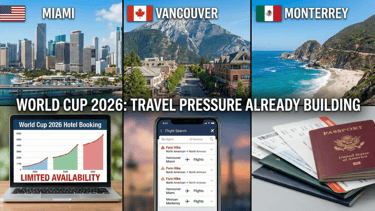
While the tournament itself is still months away, travel markets tend to move early. Accommodation providers and airlines are already positioning for demand tied to the largest and most geographically spread World Cup in history.
Three Countries, One Tournament - and Complex Travel Reality
World Cup 2026 will be the first tournament hosted across three different countries, creating unique logistical challenges for supporters.
A fan following Argentina, for example, might attend group-stage matches in Miami, Houston, and Los Angeles - crossing into different countries and navigating multiple aviation markets, visa rules, and accommodation systems within a single tournament phase.
Unlike previous World Cups concentrated in one nation or region, 2026 requires fans to think strategically about routes, border crossings, and timing, not just match tickets.
Early Pressure on Hotels and Flights
In past World Cups, accommodation pressure ramped up sharply once match schedules were confirmed - and a similar pattern is already beginning to form.
In several host cities, hotels near stadium districts are showing higher average rates compared to the same period last year, particularly for weekends likely to align with group-stage matches. Flight prices between major host hubs are also beginning to reflect anticipated demand, even before official schedules are finalized.
This early movement suggests that fans who wait too long may face limited choices rather than just higher prices.
What Fans Should Start Thinking About Now
Supporters planning a World Cup 2026 trip should already be considering:
Prioritizing flexible accommodation options in early bookings
Monitoring intercity flight routes between host cities
Avoiding last-minute planning for high-demand stadium areas
Preparing alternative travel paths if preferred cities sell out
Checking visa requirements if planning cross-border travel within the tournament
Even without exact match dates, early planning provides flexibility that late bookings rarely allow.
Why FBall26 Is Tracking This Now
FBall26 focuses on real-world football coverage, tracking how tournament logistics affect fans - not just what happens on the pitch.
As World Cup 2026 approaches, we’ll continue monitoring accommodation trends, flight movements, host city dynamics, and fan travel conditions, helping supporters plan smarter - not just cheaper.